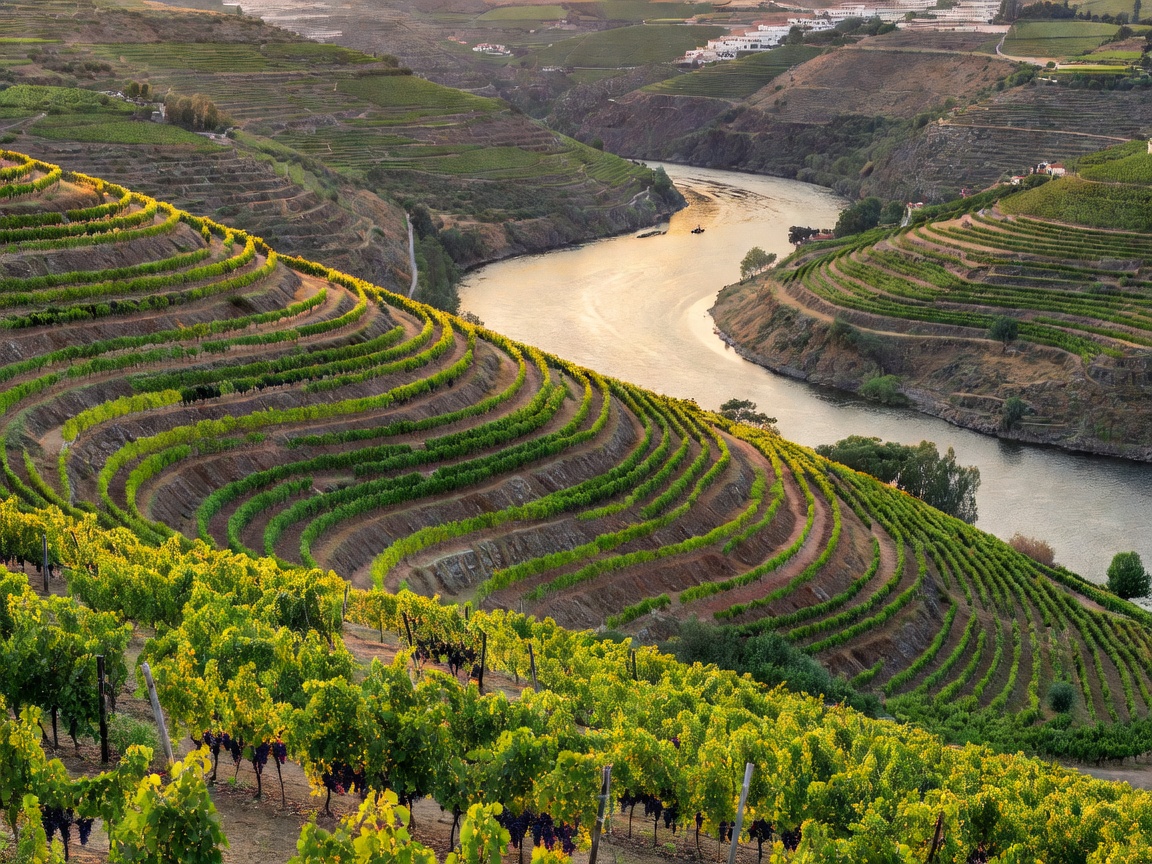
 2h10 by train
Douro Valley
The oldest demarcated wine region in the world, best reached on the scenic riverside line.
Home / Destinations / Porto
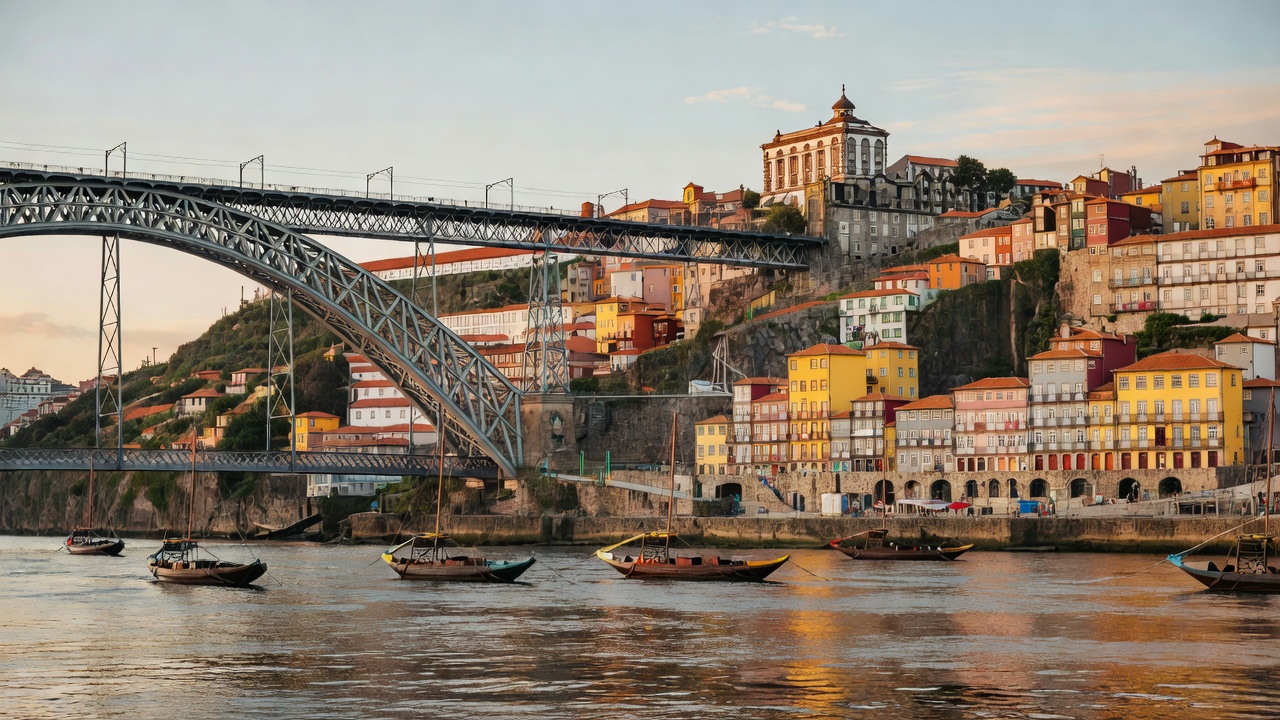
Granite, rain-polished tiles and the smell of grilled sardines. Portugal's working city gave the country its name and its most famous wine — and it wears both lightly.
Porto is a city of levels. The river runs at the bottom of a gorge; the cathedral sits on the rock above it; the commercial centre spreads on the plateau behind. Everything connects by staircase, funicular or the two decks of the Dom Luís I bridge, an iron arch designed by a student of Eiffel and opened in 1886.
Where Lisbon is pastel and theatrical, Porto is grey stone and blue-white tile, more industrial, more direct. It also eats better than its reputation suggests — this is the home of tripas à moda do Porto, of bolinhos de bacalhau fried to order, and of the francesinha, a sandwich so structurally ambitious it requires a knife, a fork and an afternoon of recovery.
Two days covers the essentials. Three lets you add Matosinhos for seafood or a trip up the Douro line.
Pedestrians share the top level with the metro. The view back at the Ribeira is the postcard, and it is free. Do it at dusk, then descend to Gaia.
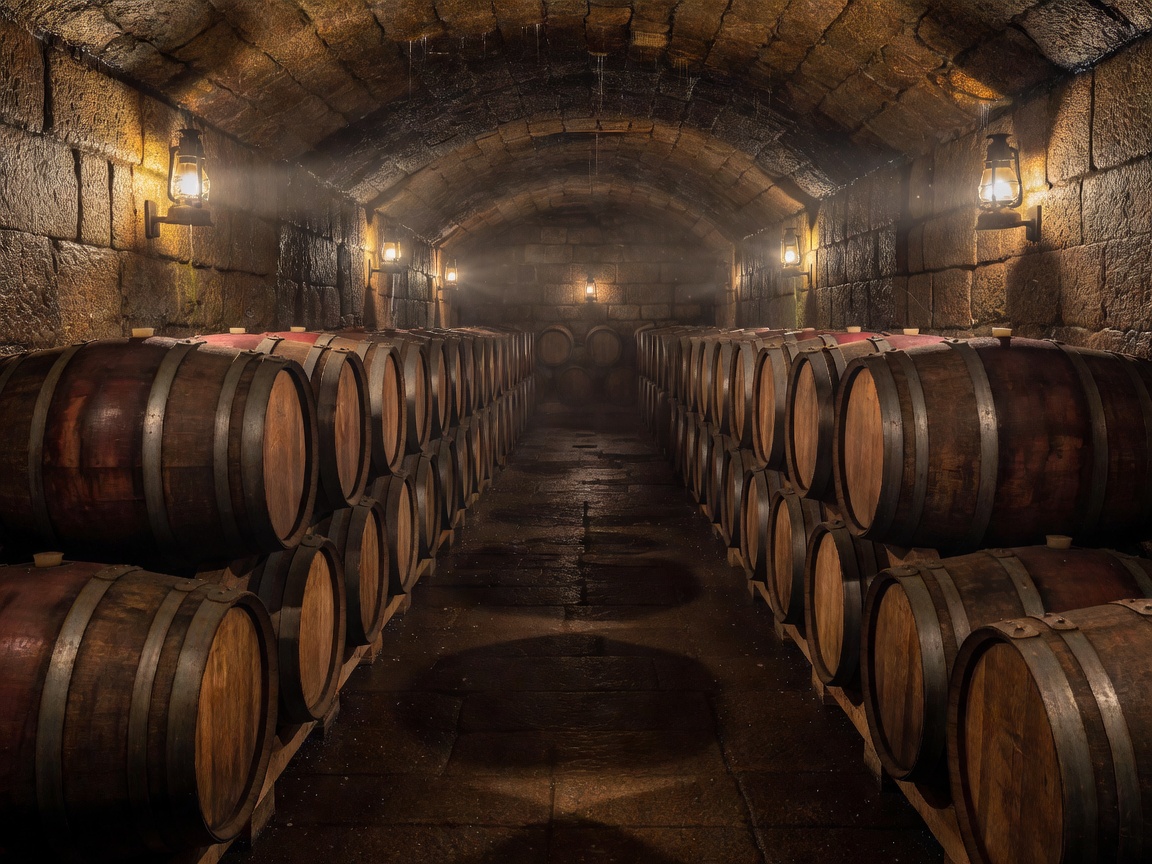
Taylor's (€25, includes a museum walk and two tastings) and Graham's for the views; Kopke for a tawny flight; Cálem for a cheaper, busier introduction with fado. One before lunch, one after, is plenty.
The famous staircase. €8 entry, redeemable against a book. Book the first slot at 09:30 or you will be photographing other people's shoulders.
Twenty thousand azulejo tiles depicting Portuguese history, in a working train station. Free, thirty seconds from Aliados.
240 steps for the best 360° view in the city. €10 including the church and museum.
Reopened after a long restoration; fish, flowers, smoked meats and a first-floor balcony of small counters serving lunch.
Contemporary art museum in an Art Deco villa with eighteen hectares of park and a famous treetop walk. €22 combined; allow half a day.
A wooden tram along the river to where the Douro meets the Atlantic. €4 single, twenty-five minutes, worth every cent.
Metro line A to Mercado, then grilled fish on Rua Heróis de França where the charcoal grills sit on the pavement. The best-value seafood meal in northern Portugal.
| Dish | What it is | Typical price |
|---|---|---|
| Francesinha | Layered meat sandwich under melted cheese and beer sauce | €12–16 |
| Tripas à moda do Porto | Tripe and white bean stew — the city's historic dish | €11–14 |
| Bacalhau à Gomes de Sá | Salt cod baked with potato, onion, olives and egg | €13–17 |
| Sardinhas assadas | Charcoal-grilled sardines, best June to September | €10–14 |
| Bolinhos de bacalhau | Cod fritters, ordered by the piece | €1.50 each |
| Vinho verde (glass) | Young, faintly sparkling white from the Minho | €2.50–4 |
Porto lunches run 12:30–15:00 and dinners from 19:30. Neighbourhoods worth eating in: Bonfim, Cedofeita and Miragaia. Avoid the restaurant row directly on the Ribeira waterfront — you pay a premium of roughly 60% for the view.
Porto's metro is clean, fast and reaches the airport (line E, 25 minutes, €2.85 including the Andante card). Buy an Andante card for €0.60 and load zone tickets; most of the tourist area falls within Z2.
Stay in Baixa/Aliados for convenience, Bonfim for value and local life, Gaia for river views across to the city, or Foz if you want ocean air and a tram commute. Streets are steep and often cobbled: wheeled luggage suffers.
Porto rains more than Lisbon — around 1,250 mm a year, concentrated between November and March. Bring a proper jacket rather than an umbrella, because the Atlantic wind will destroy it.
Yes for the historic centre, the bridge, two cellars and one long lunch. Add a third day if you want Serralves, Foz or the Douro line.
Lisbon for variety, nightlife and museums. Porto for compactness, wine and a stronger sense of a city that still belongs to its residents. With five days, do both by train.
In July, August and September, yes — at least 48 hours ahead for the larger houses. In winter you can usually walk in.
It works but it is long. The train to Pinhão takes 2h10 each way. Staying one night in the valley transforms the experience — see our Douro guide.
The north rewards a second and third stop.
2h10 by trainThe oldest demarcated wine region in the world, best reached on the scenic riverside line.
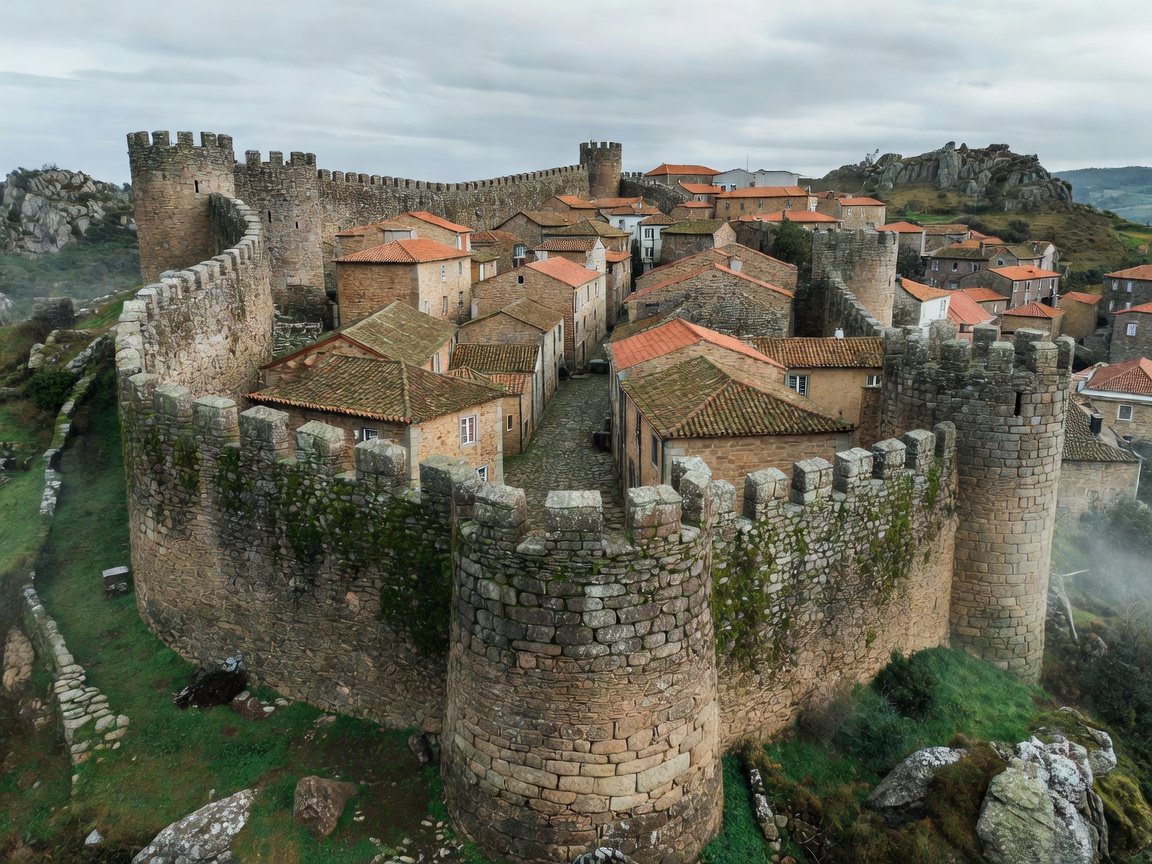 1h15
Where Portugal was founded, and the country's most baroque religious city, both easy day trips.
 Coast